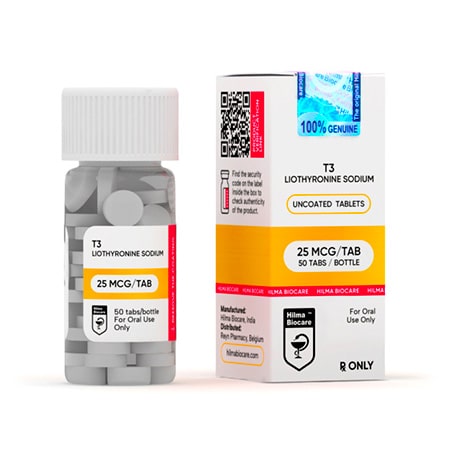
BUY LIOTHYRONINE SODIUM T3 (25 MCG/TAB. – 50 TABS)
Product Specifications
- Product: T3, Liothyronine Sodium
- Strength: 25 mcg
- Active Ingredient: Liothyronine Sodium
- Molecular Formula: C₁₅H₁₁I₃NNaO₄
- Molecular Weight: 672.96 g/mol
- CAS Number: 55-06-1
- Dosage Form: Tablet
- Route: Oral
- Market Status: Prescription
- Company: Hilma Biocare
- Pack Size: 50 uncoated tablets
- Storage: 15–25°C, protected from light
Main Product Description
Liothyronine Sodium T3 25 mcg is an oral prescription thyroid hormone preparation containing liothyronine sodium, the synthetic form of triiodothyronine (T3). T3 is one of the principal hormones produced naturally by the thyroid gland and plays an important role in regulating metabolic activity throughout the body. Unlike anabolic steroids, liothyronine is a thyroid hormone and should be used according to an appropriate medical indication and professional guidance.
Thyroid hormones influence the activity of cells and tissues throughout the body. They contribute to the regulation of energy metabolism, body temperature, cardiovascular function, neurological processes and normal growth and development. During childhood and development, adequate thyroid hormone activity is particularly important for normal tissue development. In adults, thyroid hormones help maintain normal metabolic and physiological functions.
Liothyronine differs from levothyroxine because it is the synthetic form of T3 rather than T4. T3 is the biologically active thyroid hormone that interacts with thyroid hormone receptors within cells. Because liothyronine acts directly as T3, its onset of pharmacological activity is relatively rapid compared with preparations based primarily on thyroxine.
The supplied product information states that liothyronine is readily available to body tissues because it is not firmly bound to serum proteins. Pharmacological activity can begin within several hours, while maximum pharmacological response is reported within approximately two to three days. The biological half-life is approximately 2.5 days. The source information also reports that approximately 95% is absorbed within four hours.
Liothyronine is used medically in the treatment of hypothyroidism, a condition in which the body does not produce sufficient thyroid hormone. Prolonged or severe hypothyroidism can result in significant metabolic and physiological changes. The supplied information also describes its use in certain thyroid-related situations, including suppression of thyroid-stimulating hormone (TSH) in patients with goitre and assessment of thyroid function.
The 25 mcg tablet provides a defined oral dose of liothyronine sodium. Because thyroid hormone requirements differ considerably between individuals, treatment should be individualised. Factors such as age, underlying thyroid disease, cardiovascular health, other endocrine conditions and laboratory results can influence the appropriate treatment plan.
Thyroid hormone treatment requires particular care because excessive exposure can produce symptoms resembling hyperthyroidism. The supplied adverse-effect information includes headache, irritability, nervousness, sweating, increased bowel activity, menstrual irregularities and cardiac rhythm disturbances. More serious cardiovascular effects, including angina and congestive heart failure, may occur or become worse following excessive thyroid hormone exposure.
Patients with certain underlying conditions require additional medical supervision. Thyroid hormone preparations are generally contraindicated in untreated thyrotoxicosis, uncorrected adrenal cortical insufficiency and patients with hypersensitivity to the active ingredient or formulation components. Patients with diabetes mellitus, diabetes insipidus or adrenal insufficiency may require adjustment of their existing treatment when thyroid hormone therapy is introduced.
Drug interactions are also important. Thyroid hormones may increase the effects of oral anticoagulants by influencing the metabolism of vitamin K-dependent clotting factors. Patients receiving anticoagulants therefore require appropriate monitoring when thyroid replacement therapy is initiated or adjusted.
Liothyronine may also influence the requirements for insulin or oral hypoglycaemic medicines. Patients receiving treatment for diabetes should therefore be monitored appropriately during initiation or adjustment of thyroid hormone therapy.
Other interactions described in the supplied information include potential effects involving digitalis, ketamine and vasopressor medicines. Thyroid hormones can increase metabolic and adrenergic activity, which may increase cardiovascular sensitivity to certain medicines. Patients should provide their healthcare professional with a complete list of prescription medicines, over-the-counter medicines and supplements before treatment.
The source material also discusses the use of liothyronine for reducing body fat in bodybuilding and contest-preparation settings. Such non-medical use should be clearly distinguished from established therapeutic indications. Liothyronine should not be presented as a general weight-loss product or used to accelerate metabolism without appropriate medical supervision. Excess thyroid hormone can produce potentially serious cardiovascular and metabolic complications.
One important characteristic of liothyronine is its relatively rapid pharmacological activity. This can allow physicians to make treatment adjustments when clinically appropriate, but it also means that inappropriate dosing can produce noticeable effects relatively quickly. Patients should therefore not increase the dose or alter treatment intervals without medical advice.
The supplied information gives a recommended starting dose of 25 mcg daily and describes subsequent dose adjustments. However, dosing should ultimately follow the prescription and authorised product information applicable to the individual patient. The bodybuilding-specific dose limitations contained in the source material should not be presented as medically recommended dosing.
Liothyronine Sodium T3 25 mcg is supplied as 50 uncoated tablets in one bottle. The product should be stored in a cool, dry environment between 15 and 25°C and protected from light.
Overall, Liothyronine Sodium T3 25 mcg is a prescription oral thyroid hormone product containing synthetic liothyronine sodium. Its established medical role is associated with thyroid hormone replacement and selected thyroid-related indications. Because inappropriate thyroid hormone exposure can cause significant cardiovascular and metabolic effects, treatment should be undertaken under qualified medical supervision with appropriate clinical and laboratory monitoring.
Clinical Pharmacology
Liothyronine sodium is the synthetic form of triiodothyronine (T3).
According to the supplied information:
- Activity begins within several hours.
- Maximum pharmacological response occurs within approximately 2–3 days.
- Biological half-life is approximately 2.5 days.
- Approximately 95% is absorbed within 4 hours.
- T3 is readily available to body tissues because it is not strongly bound to serum proteins.
Indications
The supplied information describes liothyronine for:
- Treatment of hypothyroidism
- Thyroid hormone replacement in appropriate patients
- Suppression of TSH in certain patients with goitre
- Assessment of thyroid function in selected clinical circumstances
The bodybuilding and weight-loss applications mentioned in the source material should not be presented as established medical indications.
Adverse Reactions
Excessive thyroid hormone exposure may produce symptoms associated with hyperthyroidism, including:
- Headache
- Irritability
- Nervousness
- Sweating
- Increased bowel activity
- Menstrual irregularities
- Tachycardia
- Cardiac arrhythmias
More serious effects may include angina pectoris or congestive heart failure, particularly in susceptible individuals.
Rare allergic skin reactions have also been reported in the supplied information.
Contraindications
Liothyronine is generally contraindicated in:
- Untreated thyrotoxicosis
- Uncorrected adrenal cortical insufficiency
- Known hypersensitivity to liothyronine or formulation components
Patients with cardiovascular conditions require careful medical assessment before and during treatment.
Precautions
Additional care is required in patients with:
- Diabetes mellitus
- Diabetes insipidus
- Adrenal cortical insufficiency
- Cardiovascular disease
- Existing cardiac symptoms
Appropriate adjustments to other endocrine treatments may be necessary.
Drug Interactions
Important interactions described in the supplied information include:
- Oral anticoagulants: thyroid hormones may increase anticoagulant effects.
- Insulin and oral hypoglycaemics: requirements may change when thyroid replacement begins.
- Digitalis: thyroid preparations may alter digitalis requirements and toxicity.
- Ketamine: combined use may increase the risk of hypertension and tachycardia.
- Vasopressors: thyroid hormones may increase adrenergic effects and cardiovascular risk.
Always inform a healthcare professional about all medicines and supplements being taken.
Dosage & Administration
The supplied information gives 25 mcg daily as a recommended starting dose, with possible adjustments according to clinical response.
However, the correct dose of liothyronine is individual and should be determined by a qualified healthcare professional based on thyroid function, medical history and laboratory monitoring.
Do not increase the dose or use liothyronine for weight reduction or athletic performance without medical supervision.
Overdosage
Excessive liothyronine exposure may cause:
- Headache
- Nervousness
- Irritability
- Sweating
- Tachycardia
- Arrhythmia
- Increased bowel activity
- Menstrual irregularities
- Angina
- Congestive heart failure
Massive overdose can produce severe symptoms resembling thyroid storm.
Suspected overdose requires prompt medical assessment.
Presentation
Liothyronine Sodium (T3) 25 mcg uncoated tablets:
50 tablets in 1 bottle.
Storage
Store in a cool, dry place between 15–25°C.
Protect from light.
Keep out of reach of children.