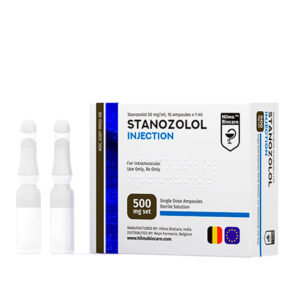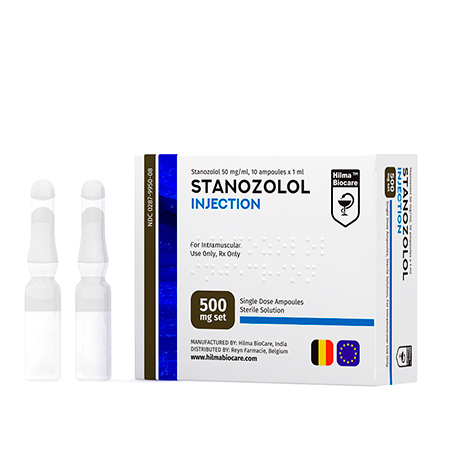
Stanozolol Injection 50 (Winstrol)
Product Overview & Pharmaceutical Specifications
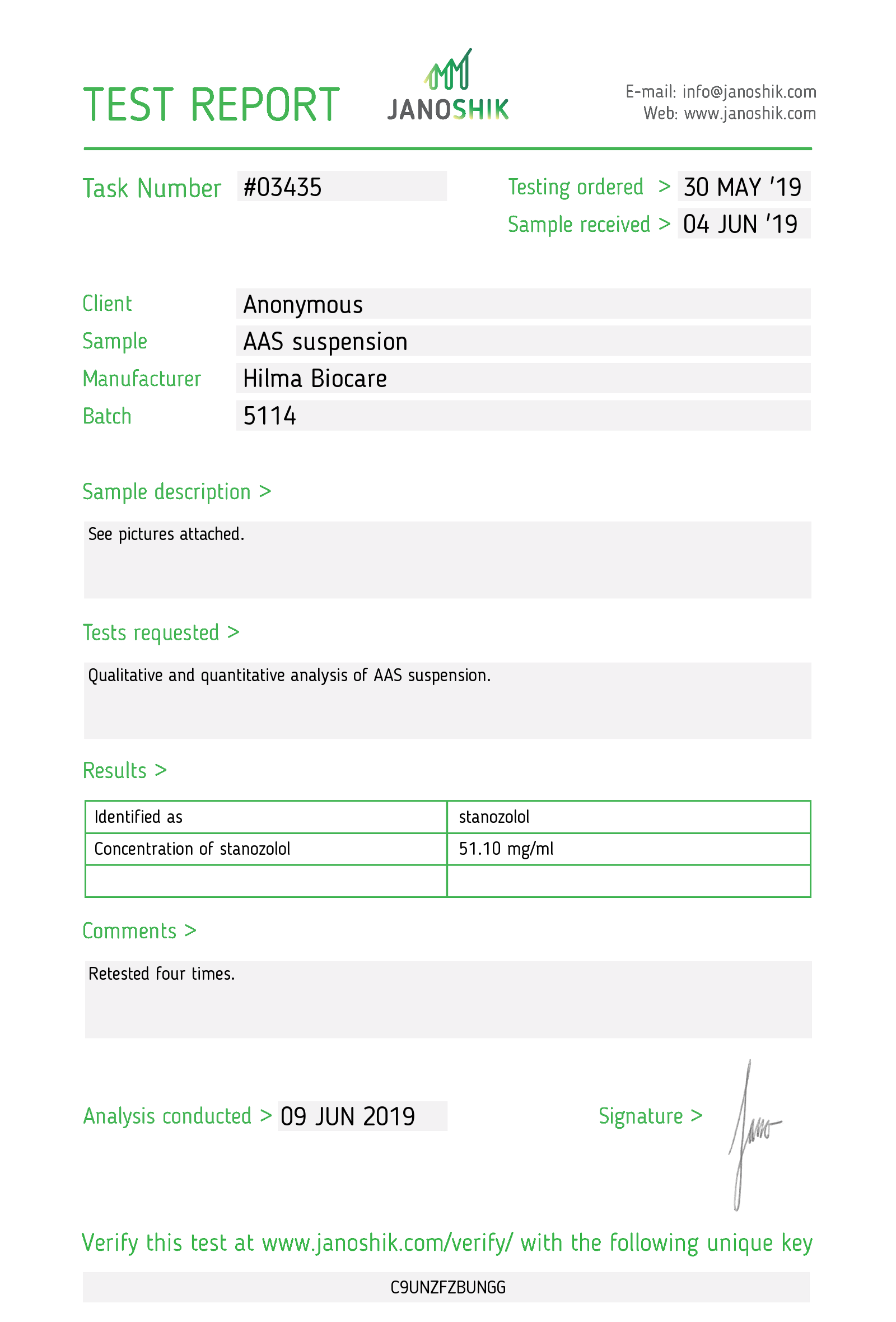
Stanozolol 50 is described in the supplied product information as an aqueous injectable preparation containing stanozolol as the active ingredient.
Product Specifications STANOZOLOL INJECTION
- Active Pharmaceutical Ingredient (API): Stanozolol
- Strength: 50 mg/ml
- Dosage Form: Injectable, water-based sterile solution
- Route: Injection
- Pack Size: 10 single-dose ampoules × 1 ml
- CAS Number: 10418-03-8
- Molecular Formula: C21H32N2O
- Molecular Mass: 328.49 g/mol
- Manufacturer: Hilma Biocare
- Market Status: Prescription
- Storage: 15–25°C; protect from light
Pharmaceutical Formulation
The supplied source describes Stanozolol 50 as an aqueous suspension of the C17α-alkylated steroid stanozolol.
The source describes stanozolol as an androgen derived from dihydrotestosterone and states that it acts on androgen receptors, with effects involving nitrogen retention and protein synthesis in muscle tissue.
The supplied presentation is 10 single-dose ampoules × 1 ml.
Pharmacology & Product Information
Pharmacological Class
Stanozolol is described in the supplied information as an anabolic steroid with androgenic activity and as a derivative of dihydrotestosterone.
Mechanism of Action
The supplied documentation states that stanozolol acts on androgen receptors and promotes anabolic activity through increased nitrogen retention and protein synthesis in muscle tissue.
The source also states that stanozolol does not convert to estrogen.
The supplied clinical pharmacology section reports effects on serum lipids, including increases in LDL and decreases in HDL, with values reported as returning toward baseline following cessation.
Hereditary Angioedema
The supplied information describes hereditary angioedema (HAE) as an autosomal dominant disorder associated with deficient or nonfunctional C1 esterase inhibitor (C1-INH).
According to the supplied source, small clinical studies reported that stanozolol was effective in controlling the frequency and severity of HAE attacks and increasing serum C1-INH and C4 concentrations.
The source specifically states that stanozolol is not effective for stopping an HAE attack while it is underway.
Documented Applications
The supplied source lists:
- Hereditary angioedema: Prophylactic use to decrease the frequency and severity of attacks
- Muscle anabolism: Adjunctive therapy for weight gain following severe muscular atrophy associated with extensive surgery, chronic infections, long-term hospitalization or severe trauma
- Corticosteroid-associated atrophy: Reduction of muscle wasting during prolonged corticosteroid use
These applications are reproduced from the supplied product information and have not been independently verified against current EU marketing authorizations or national treatment guidelines.
Contraindications
The supplied source lists the following contraindications:
- Female patients because of the risk of virilization and fetal harm
- Male patients with known or suspected carcinoma of the breast, prostate or testis
- Hypercalcaemia
- Cardiovascular disorders
- Renal impairment
- Hepatic impairment
- Epilepsy
- Migraines
- Diabetes mellitus
- Nephrosis
- Nephrotic-phase nephritis
Precautions
The supplied documentation states that anabolic steroids may suppress clotting factors II, V, VII and X and increase prothrombin time.
Anabolic steroids may also increase sensitivity to anticoagulants. The source states that anticoagulant dosage may require adjustment to maintain the desired therapeutic prothrombin time.
Oral hypoglycaemic medication may require adjustment in diabetic patients receiving anabolic steroids.
Patients should be monitored for hepatotoxicity and signs of jaundice.
Adverse Reactions
The supplied product information reports:
Hepatic
- Cholestatic jaundice
- Rare hepatic necrosis
- Hepatocellular neoplasms
- Peliosis hepatis
- Changes in liver function tests
- Increased bromsulphalein retention
- Increased serum bilirubin
- Increased SGOT
- Increased alkaline phosphatase
Genitourinary System — Post-Pubertal Men
- Inhibition of testicular function
- Testicular atrophy
- Oligospermia
- Impotence
- Chronic priapism
- Epididymitis
- Bladder irritability
Genitourinary System — Women
- Clitoral enlargement
- Menstrual irregularities
Both Sexes
- Increased or decreased libido
Central Nervous System
- Habituation
- Excitation
- Insomnia
- Depression
Hematologic
- Bleeding in patients receiving concomitant anticoagulant therapy
Hair and Skin
- Hirsutism
- Male-pattern baldness in genetically predisposed individuals
- Acne
- Oily skin
Other
- Electrolyte retention
- Reversible changes in serum lipids
Patient Monitoring
The supplied source identifies the following monitoring parameters:
- Serum cholesterol
- HDL
- LDL
- Triglycerides
- Haemoglobin
- Haematocrit
- Hepatic function tests, including AST and ALT
- PSA
- Total testosterone
- Free testosterone
- Bioavailable testosterone
- Dihydrotestosterone
- Estradiol
The source states that male patients over 40 should undergo digital rectal examination and PSA evaluation before androgen use.
Periodic prostate evaluations should continue during androgen therapy, particularly where difficulty with urination or changes in voiding habits occur.
Dosage & Administration
The supplied source states:
Muscle anabolism: 50–100 mg injected intramuscularly every 2 days for a duration of 4 weeks.
Hereditary angioedema: As prescribed by a physician.
The source states that anabolic steroids are associated with serious adverse reactions and that these reactions may be dose dependent. It advises physicians to use the lowest possible effective dose.
This information is reproduced from the supplied source and is not individualized medical advice.
Presentation
Stanozolol 50 mg/ml, 10 single-dose ampoules × 1 ml.
Storage
Store in a cool, dry place between 15–25°C. Protect from light.
Scientific & Regulatory References
No PubMed references, DOI references, clinical literature citations, manufacturer documentation or official regulatory sources were supplied with the product data.
No external citations have therefore been added.
The supplied source identifies the market status as Prescription. No specific EU Member State marketing authorization, EU-wide authorization or national authorization number was supplied.
Pharmaceutical Terms & Compliance
Important: This product information is provided for informational purposes only and does not replace professional medical advice. Always consult a qualified healthcare professional and follow the official product information, prescribing instructions and applicable regulations in your country.
Regulatory requirements, authorization status and dispensing conditions may differ between EU Member States. No EU-wide authorization claim is made here. STANOZOLOL INJECTION STANOZOLOL INJECTION STANOZOLOL INJECTION STANOZOLOL INJECTION STANOZOLOL INJECTION STANOZOLOL INJECTION STANOZOLOL INJECTION STANOZOLOL INJECTION STANOZOLOL INJECTION STANOZOLOL INJECTION