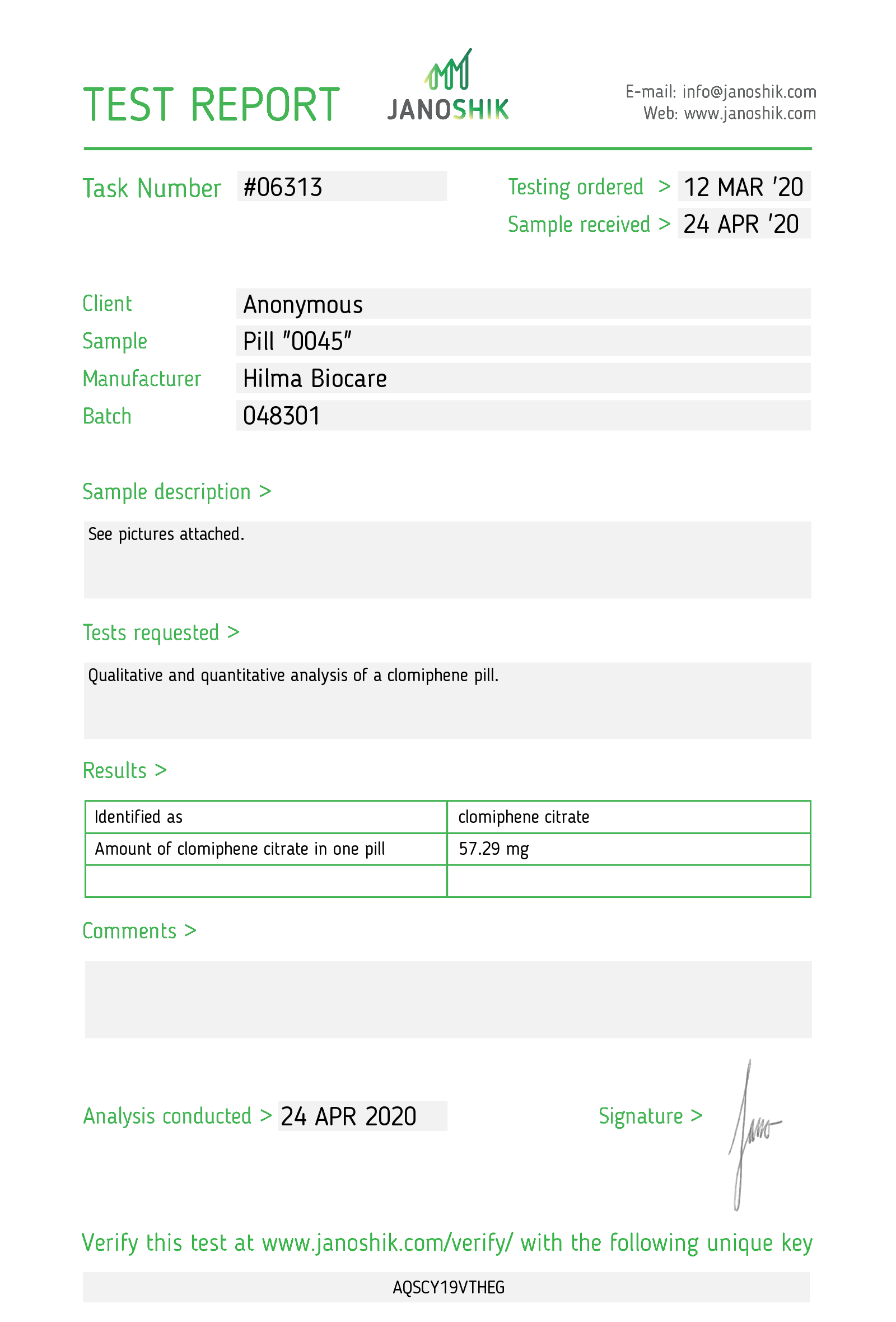
CLOMIPHENE CITRATE (CLOMID) (50 MG/TABLET – 50 TABLETS)
Product: Clomiphene Citrate (Clomid)
Strength: 50 mg per tablet
Active Ingredient: Clomiphene citrate
Molecular Formula: C32H36ClNO8
Molecular Weight: 598.08314 g/mol
CAS Number: 50-41-9
Dosage Form: Tablet
Route: Oral
Market Status: Prescription
Company: Hilma Biocare
Pack Size: 50 tablets
MAIN DESCRIPTION
Clomiphene citrate is a non-steroidal medicine used in fertility management. It has considerable pharmacological activity and interacts with tissues containing oestrogen receptors, including the hypothalamus, pituitary gland, ovaries, endometrium, vagina and cervix.
By interacting with oestrogen receptors, clomiphene can influence the hormonal mechanisms that regulate ovulation. The supplied product information describes its use in women who have difficulty ovulating because of certain medical conditions. One of the conditions specifically mentioned is polycystic ovary syndrome (PCOS).
Clomiphene citrate is supplied as an oral tablet containing 50 mg of active ingredient. As a prescription medicine, its use should be determined by a qualified healthcare professional following an appropriate assessment of the patient’s medical history and reproductive health.
Pharmacological Action
Clomiphene citrate interacts with oestrogen-receptor-containing tissues and may compete with oestrogen for receptor-binding sites. This activity influences the hormonal feedback mechanisms involving the hypothalamus and pituitary gland.
The resulting hormonal changes can stimulate the release of hormones involved in ovarian follicular development and ovulation. For this reason, clomiphene has an established role in ovulation induction for appropriately selected patients.
The response to treatment can vary between individuals. Medical monitoring is therefore important, particularly when assessing ovarian response and determining whether additional treatment cycles are appropriate.
Indications
According to the supplied product information, clomiphene citrate is used primarily for ovulation induction in women with certain conditions that prevent naturally occurring ovulation.
The supplied information describes its use for:
Ovulation induction in appropriately selected women with anovulatory conditions.
Infertility associated with certain ovulatory disorders.
Patients with conditions such as polycystic ovary syndrome where ovulation does not occur naturally.
Other uses where specifically determined by a qualified physician.
The product information also includes dosing information relating to lactation suppression and oligospermia. These uses should only be considered where clinically appropriate and under medical supervision.
Treatment and Medical Monitoring
The supplied information states that clomiphene treatment is generally administered for a limited number of treatment cycles. Before treatment, a doctor should assess the patient to exclude conditions that could make clomiphene unsuitable.
A pelvic examination is recommended before each treatment cycle according to the supplied information. Pregnancy should be excluded before treatment is initiated or repeated.
Ovulation commonly occurs several days after completing a course of treatment. Patients receiving treatment for infertility may therefore require monitoring to determine whether ovulation has occurred and whether further treatment is appropriate.
If ovulation occurs but pregnancy is not achieved after several treatment cycles, the supplied information recommends reassessment of the underlying infertility rather than continuing treatment indefinitely.
Dosage Information
The supplied product information gives 50 mg orally once daily for 5 days as the usual adult dose for ovulation induction. Treatment is generally initiated on or around the fifth day of the menstrual cycle, although the exact timing should be determined by the treating physician.
The source also describes circumstances in which additional courses may be considered if ovulation does not occur or pregnancy is not achieved. Dose adjustments and subsequent treatment cycles require medical supervision.
Because clomiphene is a prescription fertility medicine, patients should not independently increase the dose, extend treatment, or repeat treatment cycles without medical direction.
Safety and Adverse Reactions
Clomiphene may cause adverse reactions. The supplied information lists hot flushes, headache, breast discomfort or tenderness, nausea, mild abdominal discomfort, spotting or breakthrough bleeding and changes in menstruation.
More significant reactions can include visual disturbances, ovarian cysts or pelvic pain, thromboembolic events and changes in liver function. Rare reactions affecting blood-cell counts and liver health are also described.
A potentially serious complication is ovarian hyperstimulation syndrome (OHSS). Warning symptoms can include abdominal pain or swelling, nausea, vomiting, diarrhoea, rapid weight gain, reduced urination, rapid heartbeat and breathing difficulties. Medical attention should be sought promptly if these symptoms occur.
Visual symptoms such as flashes of light, floaters, increased sensitivity to light or other changes in vision also require prompt medical assessment.
Contraindications and Precautions
The supplied information states that clomiphene should not be used during pregnancy. It is also contraindicated in patients with certain conditions, including liver disease, abnormal vaginal bleeding, uncontrolled adrenal or thyroid disorders and ovarian cysts unrelated to PCOS.
Patients should inform their healthcare providers about all prescription medicines, over-the-counter medicines, vitamins and herbal products they use, as other medicines may interact with clomiphene.
PRESENTATION
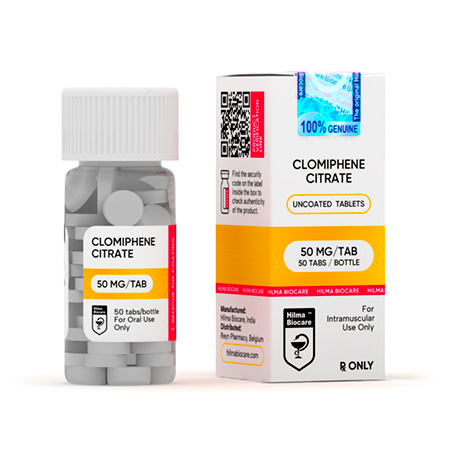
Clomiphene citrate 50 mg uncoated tablets: 50 tablets in 1 bottle.
STORAGE
Store in a cool, dry place between 15–25°C. Protect from light.