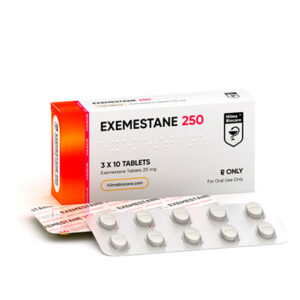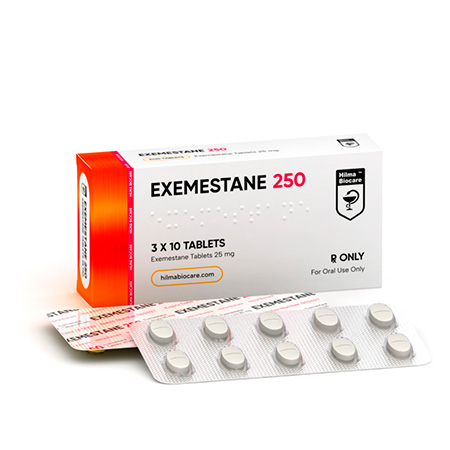
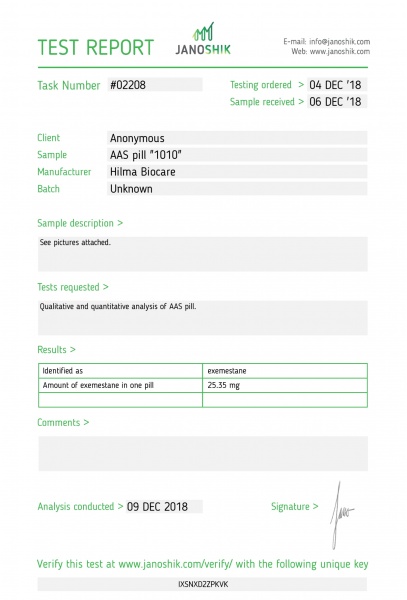
BUY EXEMESTANE 250 (AROMASIN) (25 MG/TABLET – 30 TABLETS)
PRODUCT SPECIFICATIONS
Product: Exemestane 250 (Aromasin)
Strength: 25 mg per tablet
Active Ingredient: Exemestane
Molecular Formula: C20H24O2
Molecular Weight: 296.41 g/mol
CAS Number: 107868-30-4
Dosage Form: Tablet
Route: Oral
Market Status: Prescription
Company: Hilma Biocare
Pack Size: 30 tablets
EXEMESTANE 250 MAIN DESCRIPTION
Exemestane is a synthetic steroidal aromatase inhibitor supplied as an oral tablet containing 25 mg of active ingredient. It acts by binding irreversibly to the aromatase enzyme, which plays an important role in the production of oestrogens from androgen precursors.
Oestrogen can stimulate the growth of certain hormone-receptor-positive breast cancers. By reducing oestrogen production, exemestane can help reduce hormonal stimulation of these cancers. The supplied information describes its use in postmenopausal women with certain types of breast cancer and in situations where treatment is intended to help reduce the risk of the cancer returning.
Exemestane is a prescription medicine and should be used according to an appropriate treatment plan established by a qualified healthcare professional.
Pharmacological Action
Exemestane produces sustained inhibition of aromatase activity. According to the supplied pharmacodynamic information, suppression of plasma oestrogens begins at relatively low daily doses, with maximum suppression of at least 85–95% reported at a 25 mg daily dose in the referenced studies. EXEMESTANE 250 EXEMESTANE 250 EXEMESTANE 250 EXEMESTANE 250 EXEMESTANE 250 EXEMESTANE 250 EXEMESTANE 250 EXEMESTANE 250
Following a single 25 mg dose, maximum suppression of circulating oestrogens occurred approximately 2–3 days after administration and persisted for several days.
The supplied information also reports that exemestane does not significantly affect cortisol or aldosterone secretion, including in response to ACTH. This distinguishes its aromatase-inhibiting activity from direct suppression of adrenal glucocorticoid and mineralocorticoid function.
Absorption, Distribution and Metabolism
Exemestane is extensively distributed into tissues and is approximately 90% bound to plasma proteins. Albumin and alpha-1-acid glycoprotein contribute to this protein binding.
The medicine undergoes extensive metabolism. Initial metabolic processes include oxidation at the methylene group in position 6 and reduction of the 17-keto group, followed by formation of several secondary metabolites.
The supplied information identifies CYP3A4 as the principal cytochrome P450 isoenzyme involved in the oxidation of exemestane. Exemestane is also metabolised through aldo-keto reductases.
Clinical Use
According to the supplied product information, exemestane is used to treat certain types of breast cancer in women who have gone through menopause. It may also be used as part of treatment intended to reduce the likelihood of breast cancer returning.
Some breast cancers depend on oestrogen for growth. By lowering the body’s production of oestrogen, exemestane can reduce this hormonal stimulation.
The supplied information states that exemestane is generally taken once daily after a meal and should be taken at approximately the same time each day. The duration of treatment can vary according to the individual’s treatment plan.
Dosage and Administration
The supplied product information gives a recommended dose of 25 mg once daily after a meal for early and advanced breast cancer.
If a dose is missed, the supplied information advises taking it when remembered unless it is nearly time for the next scheduled dose. A double dose should not be taken to compensate for a missed dose.
Patients should not change the dose, frequency or duration of treatment without consulting their prescribing healthcare professional.
Bone Health and Monitoring
Long-term exemestane treatment can reduce bone mineral density. The supplied information therefore emphasises the importance of regular medical assessment during treatment.
Doctors may conduct appropriate examinations and blood tests to monitor treatment and unwanted effects. Regular gynaecological follow-up is also advised for women receiving treatment.
Patients should inform their healthcare professional about other medicines, vitamins and herbal supplements they use. The supplied information specifically identifies several medicines that may require caution or adjustment when used with exemestane, including certain anticonvulsants and other enzyme-inducing medicines.
Adverse Reactions
Reported adverse reactions include hot flushes, hair loss, joint, bone or muscle pain, tiredness, increased sweating, nausea, diarrhoea, dizziness and difficulty sleeping.
More serious symptoms requiring medical attention may include bone fractures, significant mood changes, vaginal bleeding, persistent nausea or vomiting, unusual tiredness, dark urine and yellowing of the skin or eyes.
CONTRAINDICATIONS
Exemestane is contraindicated in patients with known hypersensitivity to exemestane or any of its excipients.
The supplied information also states that exemestane should not be used during pregnancy because of the potential risk of harm to an unborn baby.
PRECAUTIONS
Exemestane may reduce bone mineral density during long-term treatment. Patients should discuss bone health and appropriate monitoring with their healthcare professional.
The supplied information advises against combining exemestane with medicines containing oestrogen, including certain forms of hormonal replacement therapy and hormonal contraceptives, unless specifically directed by a doctor.
DRUG INTERACTIONS
The supplied information identifies medicines that may require particular consideration when used with exemestane, including:
Carbamazepine
Enzalutamide
Fosphenytoin
Mitotane
Phenytoin
Primidone
Rifabutin
St John’s wort
Patients should provide their healthcare professional with a complete list of medicines and supplements before starting treatment.
PRESENTATION
Exemestane 25 mg tablets – 30 tablets.
STORAGE
Store in a cool, dry place between 15–25°C. Protect from light.